

A dog can work cleanly for a trainer and look uncertain at home a week later. That does not automatically mean the dog forgot the training. More often, the information around the dog has changed.
The trainer’s cue was delivered once, at a particular volume, with consistent timing and follow-through. At home, the same word may be repeated three times. One person allows the dog through a doorway; another asks it to wait. A late correction is followed by reassurance because the handler feels guilty. Each variation seems small. Together, they create a different system.
Dogs are careful readers of consequence. They notice which person follows through, which rule changes when visitors arrive, and how long they can delay before compliance becomes optional. What a household calls stubbornness may simply be the dog responding to the pattern currently in front of it.
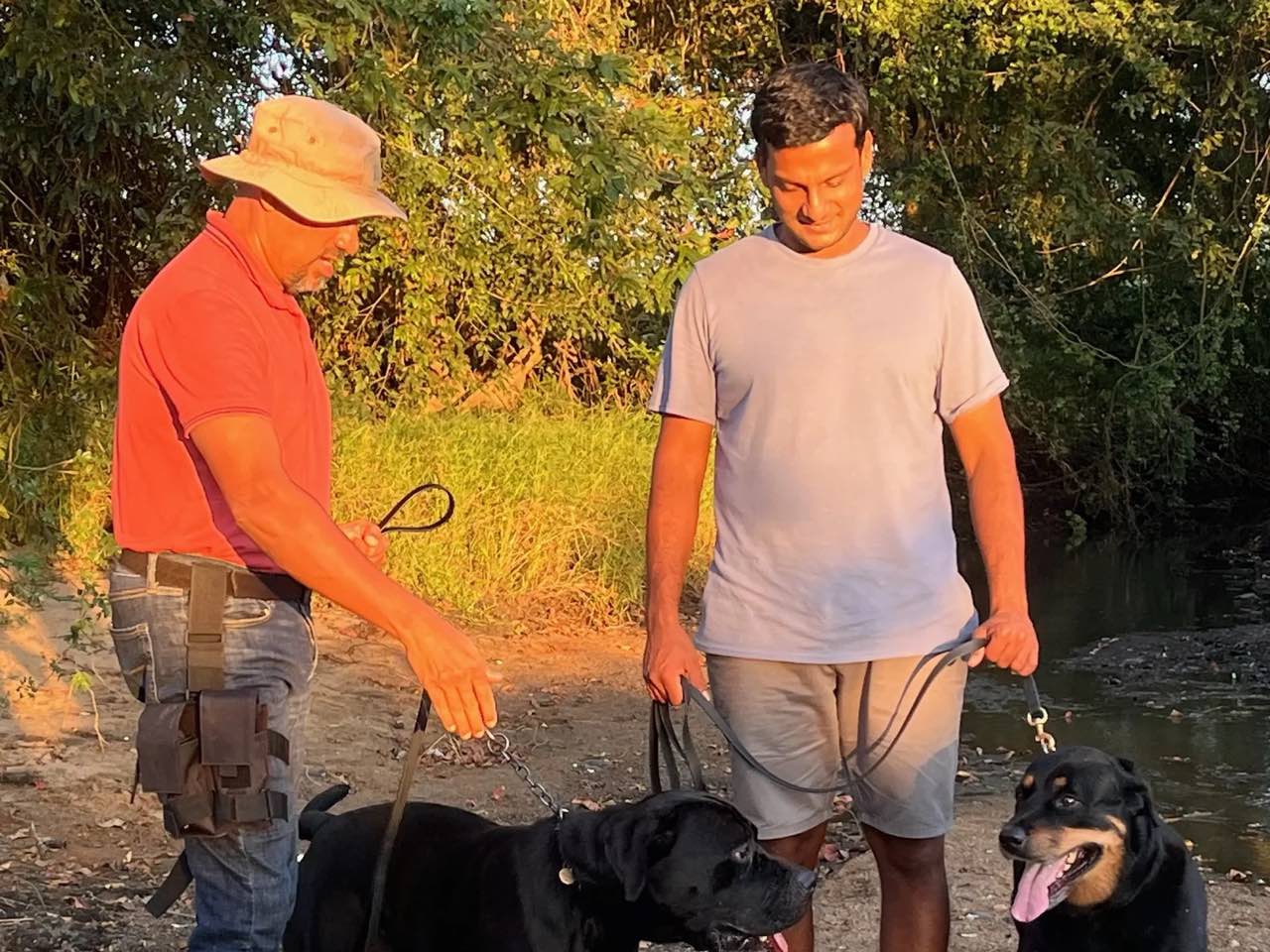
This is why handover deserves its own phase. Watching a trainer demonstrate the finished behaviour is useful, but observation does not build handling skill. The owner needs to work the dog while the trainer can still see the missed cue, the tightened lead, the praise delivered too early, or the hesitation that turns a clear boundary into a negotiation.
Good transfer is practical. It uses the places where the dog will actually live: the front gate, the vehicle, the road outside the house, the room where visitors are received. It includes the people who feed, walk, release, and manage the dog each day. In a staffed household, excluding a driver, housekeeper, gardener, or security officer from the relevant instructions leaves a gap the dog will find.
The trainer also has to resist performing during handover. If the trainer steps in every time the owner’s timing slips, the dog continues to rely on the trainer. The more useful approach is supervised repetition. The owner works through the same situation until the cue, body position, consequence, and release become clear enough to repeat without rescue.
Aftercare matters because households drift. A rule becomes inconvenient on a busy morning. A family member introduces a second command. Exercise changes, staff rotate, or a dog enters adolescence and begins testing an arrangement that previously held. A review can identify that drift before it is described as complete regression.
Three questions reveal whether transfer is being taken seriously:
- Can the dog perform for the people who live with it, without the trainer holding the lead? - Can those people explain what they will do when the dog does not comply? - Have the rules been tested in the environments where failure is most likely?
A programme reaches its real test after the formal training period. The dog returns to ordinary life, and the household becomes responsible for the standard. If the people have not been prepared for that responsibility, the work remains incomplete no matter how polished the final demonstration looked.
The trainer’s cue was delivered once, at a particular volume, with consistent timing and follow-through. At home, the same word may be repeated three times. One person allows the dog through a doorway; another asks it to wait. A late correction is followed by reassurance because the handler feels guilty. Each variation seems small. Together, they create a different system.
Dogs are careful readers of consequence. They notice which person follows through, which rule changes when visitors arrive, and how long they can delay before compliance becomes optional. What a household calls stubbornness may simply be the dog responding to the pattern currently in front of it.
This is why handover deserves its own phase. Watching a trainer demonstrate the finished behaviour is useful, but observation does not build handling skill. The owner needs to work the dog while the trainer can still see the missed cue, the tightened lead, the praise delivered too early, or the hesitation that turns a clear boundary into a negotiation.
Good transfer is practical. It uses the places where the dog will actually live: the front gate, the vehicle, the road outside the house, the room where visitors are received. It includes the people who feed, walk, release, and manage the dog each day. In a staffed household, excluding a driver, housekeeper, gardener, or security officer from the relevant instructions leaves a gap the dog will find.
The trainer also has to resist performing during handover. If the trainer steps in every time the owner’s timing slips, the dog continues to rely on the trainer. The more useful approach is supervised repetition. The owner works through the same situation until the cue, body position, consequence, and release become clear enough to repeat without rescue.
Aftercare matters because households drift. A rule becomes inconvenient on a busy morning. A family member introduces a second command. Exercise changes, staff rotate, or a dog enters adolescence and begins testing an arrangement that previously held. A review can identify that drift before it is described as complete regression.
Three questions reveal whether transfer is being taken seriously:
- Can the dog perform for the people who live with it, without the trainer holding the lead? - Can those people explain what they will do when the dog does not comply? - Have the rules been tested in the environments where failure is most likely?
A programme reaches its real test after the formal training period. The dog returns to ordinary life, and the household becomes responsible for the standard. If the people have not been prepared for that responsibility, the work remains incomplete no matter how polished the final demonstration looked.